
Under-resourced organizations make easier targets.
Donor records, grant financials, beneficiary data. Non-profits hold sensitive information and often lack the resources to protect it. That combination doesn't go unnoticed.
We help non-profits build IT and security programs that protect their people, their donors, and their mission.
Non-profits hold sensitive donor data, manage global operations, and carry the trust of the communities they serve. Yet they're routinely priced out and deprioritized by a security industry built for corporate budgets and corporate concerns.
We entered this space because we believed it mattered. From the beginning, we've worked alongside mission-driven organizations — including pro bono work with TechSoup, Tech:NYC, and its Decoded Futures initiative — because the strength of your balance sheet shouldn't determine the quality of your security.
Most of the non-profits we started working with five years ago are still with us.

Donor records, grant financials, beneficiary data. Non-profits hold sensitive information and often lack the resources to protect it. That combination doesn't go unnoticed.
Non-profits often get the same pitch, the same contracts, and a team that has never worked with an organization like theirs.
Cyber insurance carriers, government grantors, and major funders are all raising their security requirements. For lean organizations without dedicated IT or security staff, keeping up is increasingly difficult without the right partner.
We don't apply a standard playbook. Every engagement is scoped around your risk profile, your budget, and your growth stage.
Grant cycles, board reporting, remote-first operations, high staff turnover. We understand the dynamics that shape nonprofit IT. You shouldn't have to explain how your organization works to your security partner.
We entered this space because we believed it mattered. That's still true. Non-profits aren't a secondary market for us. They're a core part of why we built this practice.
"I was constantly worried about cybersecurity risks and potential downtime. We lacked in-house expertise, and when our one IT person retired, we needed to act fast."
Mark J. Spalding
President & CEO, The Ocean Foundation
![]()
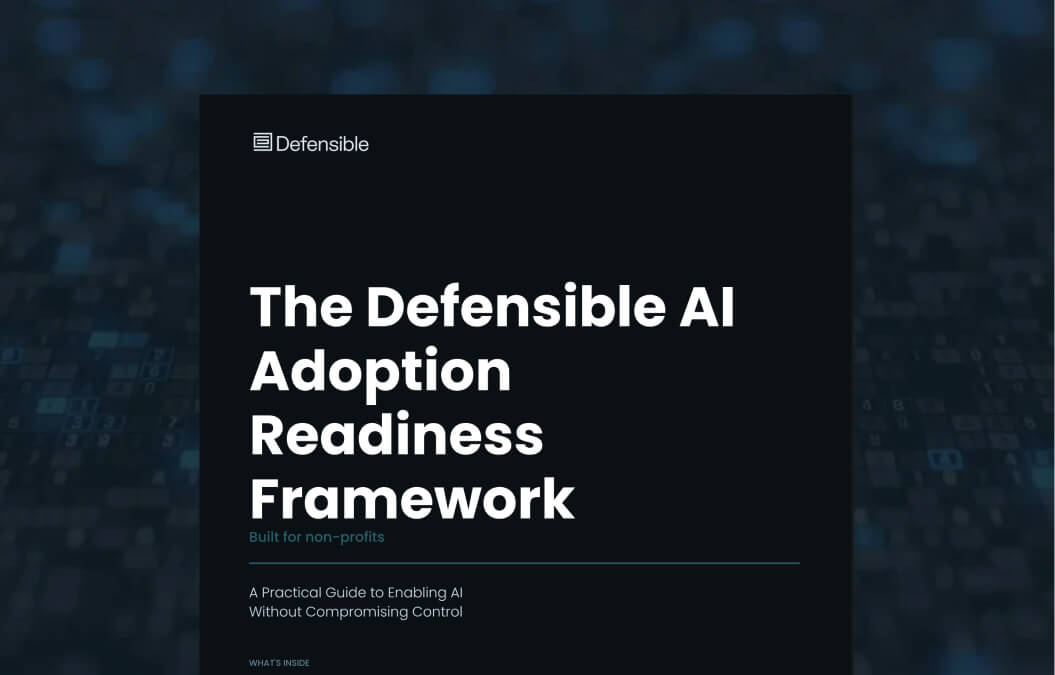
Non-Profits are being asked to adopt AI without the infrastructure, policies, or guidance to do it safely. The Defensible AI Readiness Framework was built specifically for mission-driven organizations navigating that pressure.
Most non-profits we talk to already understand the risk. What they need is a partner who understands their world.